Investors Dish on New Startups & What They'd Back Next
News, news analysis, and commentary on the latest trends in cybersecurity technology. Investors Dish on New Startups & What They'd Back Next The cybersecurity market is difficult to predict, but a glimpse into the annual DataTribe Challenge shows w...
News, news analysis, and commentary on the latest trends in cybersecurity technology.
Investors Dish on New Startups & What They'd Back Next
The cybersecurity market is difficult to predict, but a glimpse into the annual DataTribe Challenge shows what's trending and what's not.
Startups have been battling it out on the DataTribe Challenge stage for the last 9 years, but this year's event still saw some firsts.
A cyber insurance company made the top five finalists, and attendees got to vote for their favorite finalist with the People's Choice Award. Both of these firsts highlighted how people are looking for answers to new risks introduced by artificial intelligence (AI).
The DataTribe Challenge, hosted by the cyber startup foundry and venture capital firm, is one of the signature events of its annual Cyber Innovation Conference. The meeting, which took place in October, aims to unite the cybersecurity ecosystem, from founders to investors, and — since it's held in Washington, D.C. — some policymakers, too.
Cybersecurity conferences pop up on the calendar more frequently these days; that momentum is important "to keep the information fresh" as the industry and threat landscape transforms rapidly, explains Robert Ackerman, managing director at DataTribe. Game-changing incidents that require sharing information emerge almost daily now, he adds, pointing to the more recent PHP2Shell vulnerability that attackers jumped on and proved difficult for organizations to patch.
An expanding pool of cyber-related startups is also driving industry transformation. Nearly 700 rising companies submitted entries or were considered for this year's Challenge, which pairs startups with mentors before they pitch to judges who crown the winner.
Is It All About AI?
As Ackerman and Leo Scott, managing director at DataTribe, filtered down the contestants into the top five list, they found it interesting that many of the startups focused on the dynamics around how AI is driving the market as organizations transition from AI adoption to managing the technology.
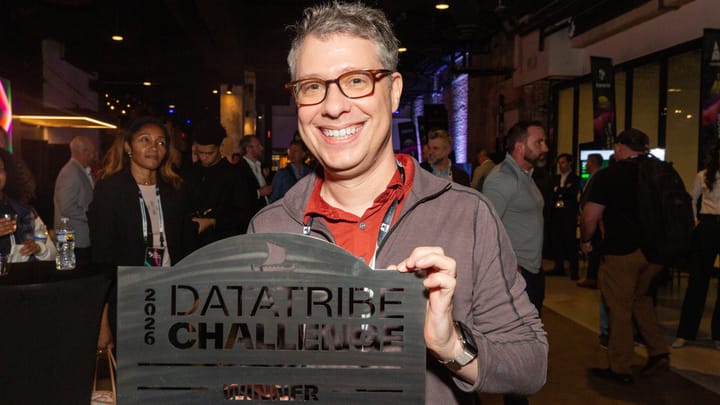
Some companies had a more direct tie. This year's winner, Sondera, aims to solve agentic architecture challenges like improving guardrails and security controls.
But a cyber insurance company Navasana, which made the top five for the first time ever, was an example of a company indirectly focused on AI. Instead, Navasana launched to handle new risk dynamics that AI created, speaking to broader industry trends.
At one level, everyone's been thinking about cyber insurance for a long time, Ackerman adds. But looking at how policies are written in cyber, he's noticed a shift in risk as they add disclaimers and exemptions.
"What makes cyber attractive from an investment perspective is you never really solve it," Ackerman tells Dark Reading. "You never mitigate risk fully. It's a very hard puzzle piece to put together. The hope with AI is you get this real-time data to understand posture and environments. I still think there's a real lag though because insurance doesn't operate in real time."
Navasna marked the first cyber insurer to make the top five due to the end-to-end, continuous services it offers in a space where organizations manage such a broad umbrella of needs. As an early-stage investor, Ackerman is not looking to "feed the consensus machine" but wants to anticipate what's next. In venture capital, that's hard right now, he adds. Still, the conference and DataTribe Challenge look to showcase companies that are currently topical and addressing real needs.
Navasana is an example of more emerging needs, says Ackerman,, while Sondera is in the "sweet spot" by addressing current challenges, as attacks make it clear that agentic AI needs more guardrails.
Sondera is "doing some really interesting things in that space that are well beyond what others are doing", says Scott. What resonated with the audience was how much research Sondera put into understanding what organizations actually need, he adds.
Rather than operating at the rule level, Sondera's approach starts at a much higher level, beginning with the human's underlying intent and what they're trying to achieve. Then organizations can work with users to generate the specific rules.
It's increasingly evident that agents can be very persistent and act independently, so control is essential. That may be one reason that Sondera took home the trophy — people really understand the problems they've seen in their environments, adds Ackerman.
"The Best You Can Do"
Ackerman sees two timelines in cybersecurity right now. Discussions over the past 18 to 24 months centered around concerns that offense has more of an advantage as attackers use AI to become faster and more advanced. Defense will catch up, but he believes that what the industry knows about cybersecurity — how to protect systems, and layer defense and zero trust — still work.
"We just have to apply them efficiently all the time," he urges.
The other timeline is what happens after 24 months. What issues will emerge then? Those are the core concepts, like protecting Internet infrastructure, that DataTribe wants to showcase in these events.
And the long-term lens is what the investors are betting on right now.
"It's not about what is going to get picked up in the next three to four months," says Ackerman. The startups and investments "have more of a five- to 10-year time horizon," he says.
One of Ackerman's favorite pastimes once startups wrap up their Challenge pitches is to walk around the floor while everyone's waiting for the judges to cast their votes and announce the winner. He considers the disconnect: He's spent weeks with the companies, coaching and prepping, yet the audience full of people from across the industry only get to know them for 20 minutes.
That's what makes storytelling so important, not just the cybersecurity and technical points. Learning what the judges and audience think of these companies is important for DataTribe, as well as for the startups which is the true value of cyber competitions.
For Ackerman, it's always great to hear that people had been thinking about a problem one of the contestants was trying to solve, but no one had developed a solution.
"That's validating," Ackerman says. "We're sort of directionally correct, which maybe in this market is the best you can do on any given day."